VEGA
TO 20 KM
Imperial College London
The pathfinder. An 8 m liquid rocket on the most powerful engine built by UK students, flying to 20 km over Nevada.
The pathfinder
Before AURORA goes past the Kármán line, VEGA proves the whole chain on a real flight: a printed engine, a liquid feed system, the avionics and a two-stage parachute recovery. The target is 20 km, above the 17.2 km altitude record for a liquid bipropellant rocket.
- Height
- 8 m
- CACTUS thrust
- 7.1 kN
- Propellants
- LOX + ethanol
- Target apogee
- 20 km
- Record to beat
- 17.2 km
- Launch site
- Nevada
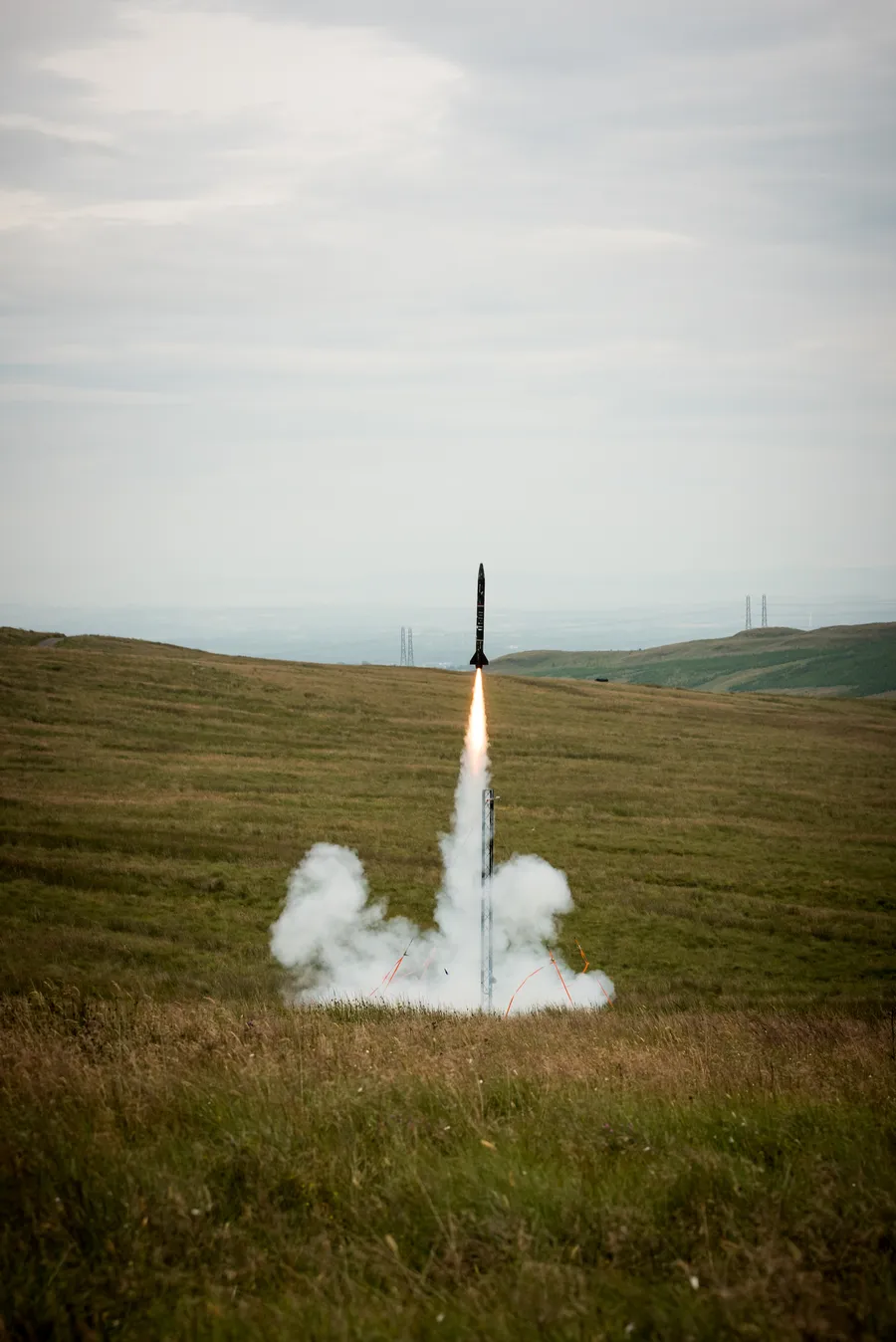
Our roadmap
- Jul 2022 NEBULA First test flight, Fairlie Moor, Scotland ~16,000 ft (≈4.9 km)
- Sep 2023 ORION Two-stage, Mojave, California Lifted off; second stage did not ignite
- Summer 2026 VEGA Liquid pathfinder, CACTUS engine, Nevada Target 20 km
- Next AURORA Reusable flagship Over 100 km
The engine
CACTUS
7.1 kN of continuous thrust in flight configuration: a new record for a liquid rocket engine built by UK students. Four hot fires totalling 18 seconds at full thrust at Airborne Engineering's J1 site qualified it for VEGA.
- Printed
- Additively manufactured with NikonSLM
- Throttled
- An electronic valve varies the propellant flow
- Cryogenic
- Liquid oxygen and ethanol, fed under pressure
- Qualified
- 4 hot fires, 18 s at full thrust
How it flies
The flight computer flies it. It holds full thrust off a 12 m rail, lets the fins weathercock the nose into the wind, and keeps asking one question: if the engine stopped now, how high would we coast? The moment the answer is 20 km, it cuts CACTUS.
- T+0Ignition and railOff a 12 m rail at 29.4 m/s, fast enough for the fins to bite.
- T+8.6Mach 1Through the transonic drag rise near max-Q.
- T+15.7CutoffThe predictor says 20 km. Engine off with 3.0 kg left, at Mach 2.1.
- T+45Past the recordCoasting through 17.2 km, still climbing.
- T+70Apogee, 20.2 kmThe drogue opens in air a twentieth as dense as on the ground.
- T+294MainOpens 600 m above the playa.
- T+6 minTouchdown9.2 m/s, 1.6 km from the pad. Ready to fly again.
The dashed line is the plan: this flight, flown headless and saved as the ghost. Vehicle masses and aerodynamics are ours (illustrative) until KSP's own numbers replace them; thrust, height, target and record are theirs.
Live · Black Rock Desert, Nevada (illustrative)
Your turn
Take the engine off the flight computer. Ride the throttle, cut it early, open the chutes yourself. Open the main at Mach 2 and it will shred. Press Auto and the computer takes over from wherever you left it.
L launch · W/S throttle · X cutoff · 1 drogue · 2 main · A auto
Run it headless ↗Plan a mission
Every slider flies the whole mission again in about 50 milliseconds, with the same flight computer. Try a windy day, lean the rail the wrong way, or scale it up to AURORA and see what it takes to reach space.
Kind, smart, driven
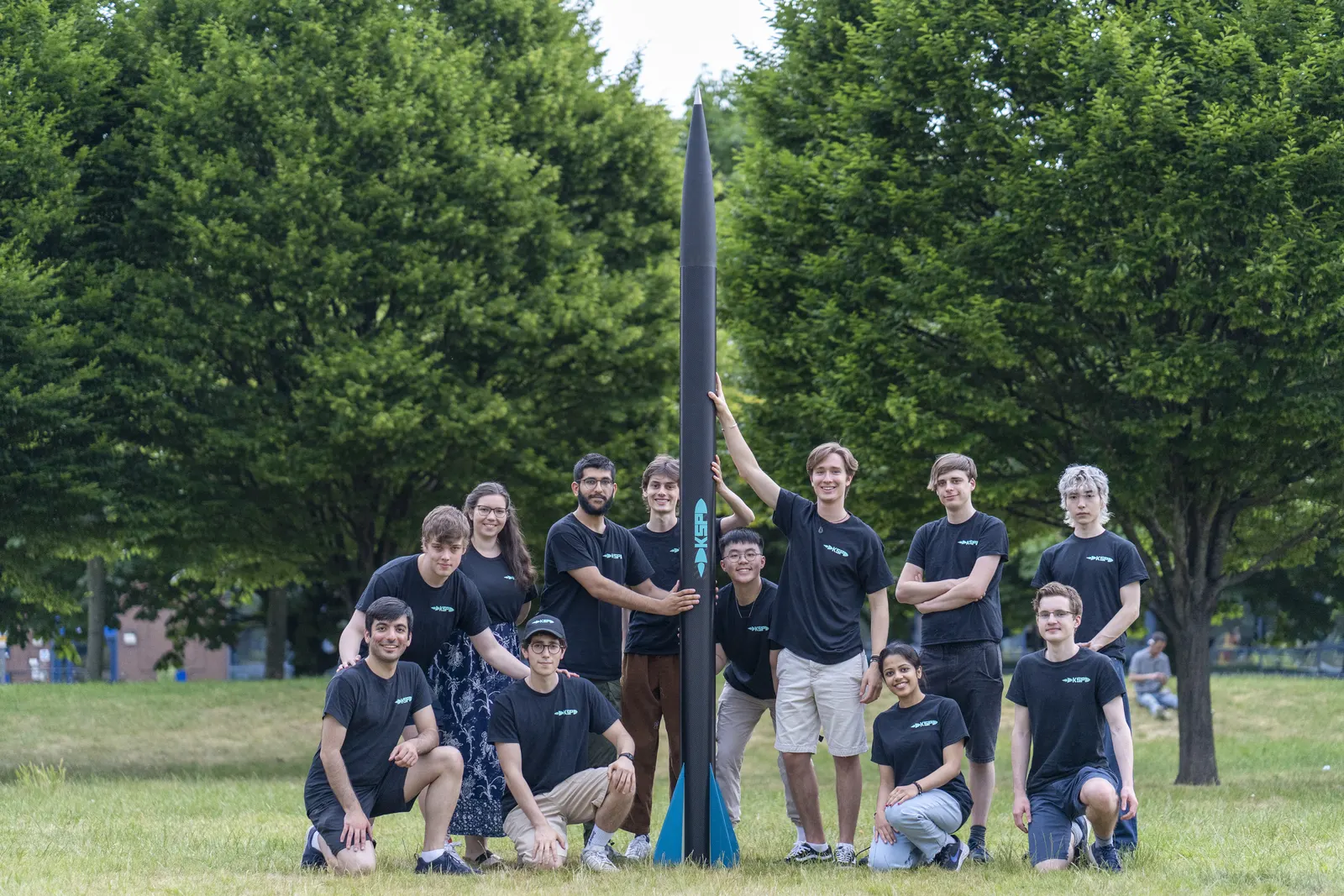
Students from aeronautics, computing, electrical and mechanical engineering and materials science at Imperial College London, founded in 2021. Members have gone on to MIT and Harvard, to SpaceX and Airbus, and to their own startups. Three have been accepted to Y Combinator.
“The challenge of offering greater access to space, at reduced cost and with minimal environmental impact places space sustainability at the top of the agenda. I’m delighted to see ICL taking up that challenge.”
Tim Peake, first British astronaut to walk in space
“With a reusable design, the Karman Space Programme students are stretching rocket technology to deliver positive benefits to our lives with minimal negative impact on the Earth.”
Helen Sharman, first British person in space
Partners
- NikonSLM
- Airborne Engineering
- Swagelok
- RS
- Aalberts Surface Technologies
- ACCU
- Rapid Direct
- Cybral